Latest Episode
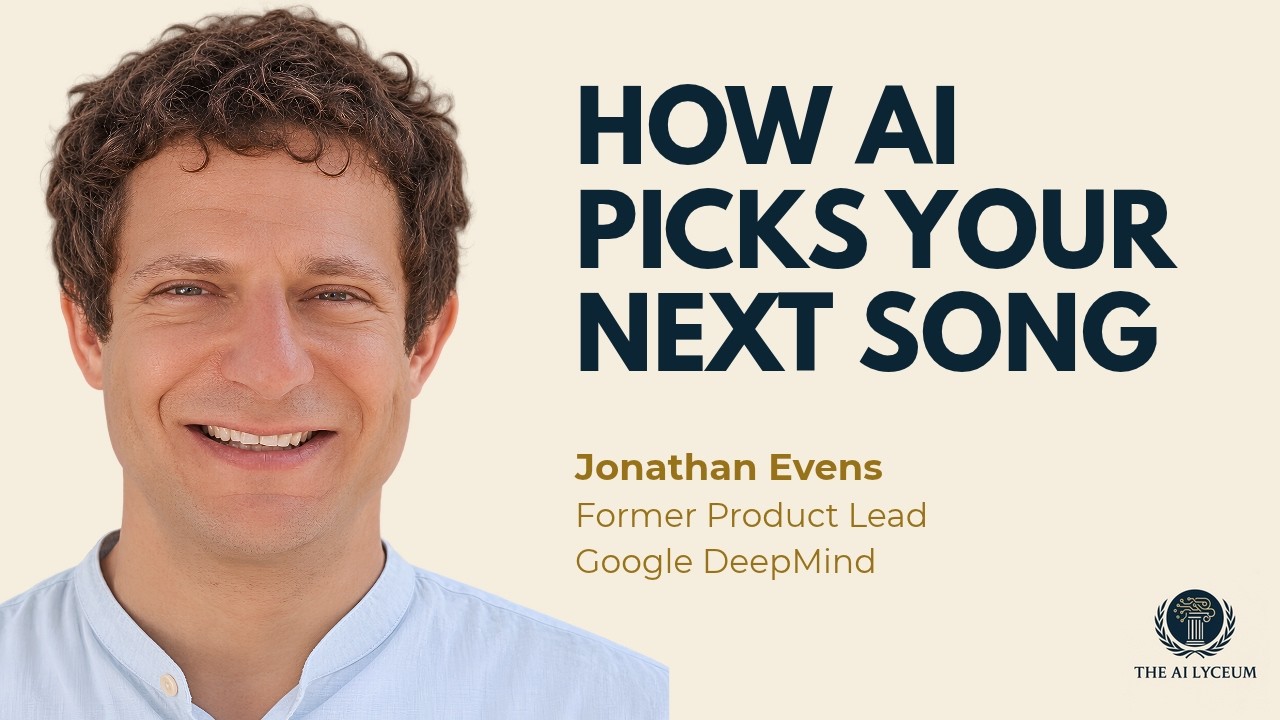
How YouTube Music recommends songs
Jonathan Evens · ex-Google DeepMind
24 November 2026 · 62 min · Episode 41
How does YouTube Music decide which songs to recommend? Jonathan Evens spent five years at Google DeepMind working on the recommendation systems behind Google Search, YouTube and YouTube Music. A conversation on deep learning, reinforcement learning, regretted clicks and who decides what a feed rewards.
About
The Lyceum Project for AI: examining intelligence, not just reacting to it
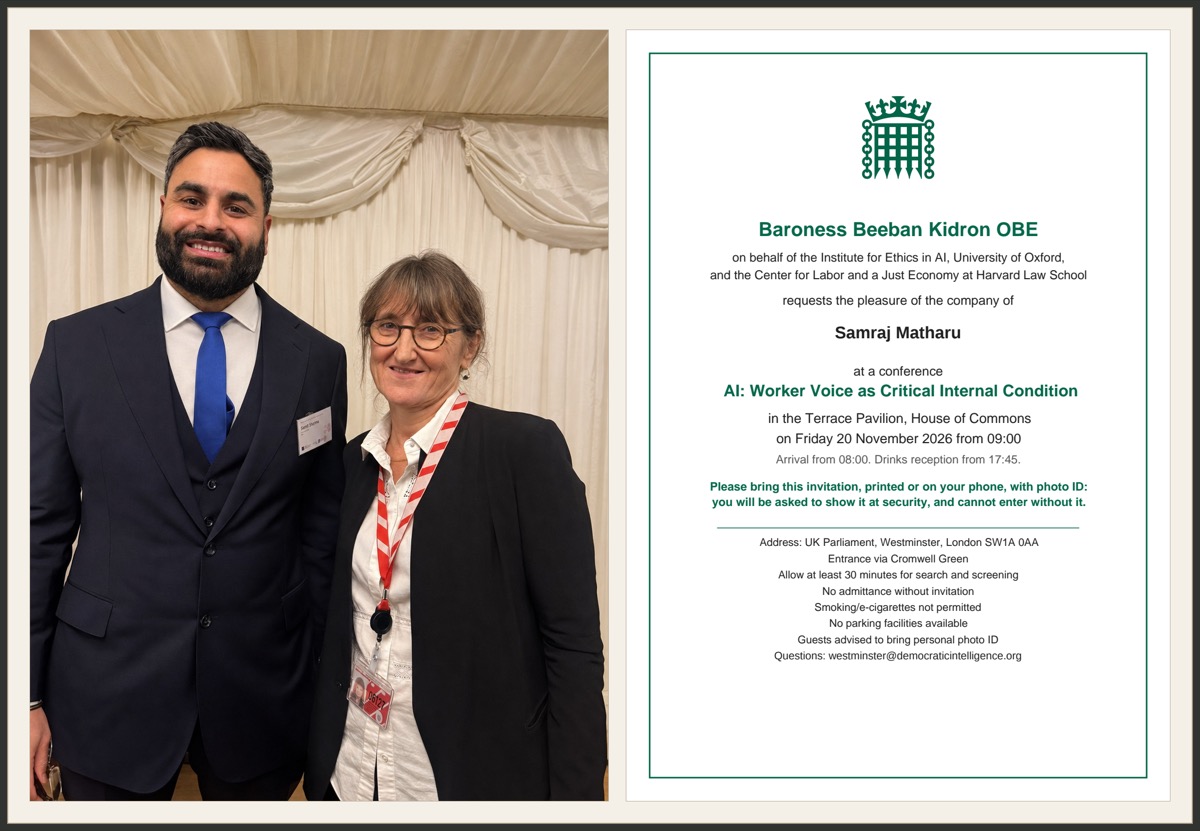
The AI Lyceum is an independent platform founded in London by Samraj Matharu, a Certified AI Ethicist and AI & media strategist. The name references Aristotle's Lyceum — a place for walking and arguing, not broadcasting. That is the intended posture: curiosity first, positions second. As a lyceum project dedicated to artificial intelligence, it brings the peripatetic tradition into the age of machine learning, agentic systems and large language models.
The AI Lyceum® founder, Samraj Matharu, is an Academy Member of the International Academy of Digital Arts & Sciences (IADAS) and an Judge for the 31st Annual Webby Awards.
The public conversation about AI moves between hype and alarm, and skips the part in the middle where the actual decisions are made. The AI Lyceum exists for that middle ground — connecting technical builders, researchers, and policy makers to discuss responsible AI adoption and human values.
What lives here: a podcast with 41 published episodes, a weekly LinkedIn newsletter, The AI Republic (a Socratic dialogue on AI and philosophy), open-source projects including advertisingprotocols.com, and a community of 1,000+ members from research labs, agencies and universities.
Building AI Agents
Agentic AI, MCP and the ethics of autonomous systems
The rise of AI agents — autonomous systems that reason, plan and act on behalf of humans — is the defining shift in artificial intelligence in 2026. From Model Context Protocol (MCP) to multi-agent orchestration, building AI agents raises new questions about trust, accountability and governance that traditional AI ethics frameworks were not designed to answer.
The AI Lyceum examines agentic AI through the lens it applies to every technology: what decisions are being delegated, who is accountable when agents act, and what guardrails belong in production systems. Podcast episodes on agentic advertising (Ep. 24), the agentic internet (Ep. 5), and conscious AI (Ep. 10 with Dr Daniel Hulme) explore these questions with practitioners who are building and deploying agent systems today.
Whether you are building agents with Claude, GPT, or open-source frameworks, or evaluating agentic AI for your organisation, The AI Lyceum provides the ethical and philosophical grounding that technical documentation alone cannot offer. Our community includes members from NVIDIA, WPP, Deloitte, SAP, PwC, KPMG, Deutsche Bank and 100+ other organisations navigating the same transition.
The Podcast
41 long-form conversations with researchers and practitioners
Each episode is a long conversation with one person who has done the work. Guests have included a rhetoric scholar from Tel Aviv University, a TIME100 AI roboticist, researchers from Google DeepMind and IBM Research, the CEO of Apostra, engineers from Cerebras, faculty from Kellogg, Oxford and UC Berkeley, and the IAB Tech Lab's SVP of Product.
- Tel Aviv University
- Google DeepMind
- Cerebras
- IBM Research
- IAB Tech Lab
- UC Berkeley
- UCL
- University of Oxford
- Kellogg School of Management
- University of the Witwatersrand
- Satalia / WPP
- Ogilvy
- Apostra
- LMU Munich
- Magic AI
- Wondercraft
- SingularityNET
- CUNY
All Conversations
Every episode and guest
-
41
How YouTube Music recommends songs
Jonathan Evens · ex-Google DeepMind
How does YouTube Music decide which songs to recommend? Jonathan Evens spent five years at Google DeepMind working on the recommendation systems behind Google Search, YouTube and YouTube Music. A conversation on deep learning, reinforcement learning, regretted clicks and who decides what a feed rewards.
24 November 2026
Show notes → -
40
What AI benchmarks miss
Mala Kumar · Humane Intelligence
What do AI benchmarks miss when five reviewers disagree on the same response? How human-centred AI red teaming works in practice, why disagreement matters more than a single score, and why you cannot unbake the cake.
15 November 2026
Show notes → Listen → -
39
AI agents: why human oversight isn’t enough
Dr Reid Blackman · Virtue
What happens when an AI agent makes more decisions than a human can realistically check? The south star approach to ethical nightmares, and why trained teams and layered safeguards matter more than a single reviewer.
4 November 2026
Show notes → Listen → -
38
AI and the myth of originality
Dr Nana Ariel · Tel Aviv University
What happens to originality when AI can write, argue and persuade? Rhetoric scholar and former Fulbright visiting scholar at Harvard on cliches, creativity and why we want conversation to be challenging.
26 October 2026
Show notes → Listen → -
37
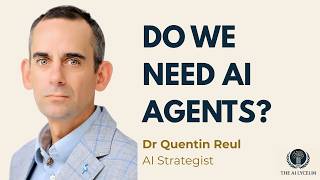
Do you really need AI agents?
Dr Quentin Reul · expert.ai
Does every business need AI agents, or could a simpler workflow do the job better? A conversation on knowledge graphs, agentic workflows and when automation crosses the line.
24 September 2026
Show notes → Listen → -
36
Is AI making us less capable?
Professor Sven Nyholm · AI ethics, LMU Munich
What happens to human judgement when a chatbot can think, write and advise us at any moment? AI ethics with one of Europe's leading philosophers of technology.
10 September 2026
Show notes → Listen → -
35
How AI is changing business — and the human skills that still matter
Dipika Sawhney · Google
AI is making it faster and cheaper to build, test and launch new ideas — but it is not replacing judgement. A Google leader on the human skills that still matter.
24 August 2026
Show notes → Listen → -
34
If AI becomes conscious, does it deserve rights?
Anna Mikeda · AI psychology researcher
What happens when AI stops being a tool and begins to resemble a mind — and what might humanity owe it?
12 July 2026
Show notes → Listen → -
33
Should AI be in the classroom? The human cost of generative AI
Professor Wayne Holmes · UCL
UCL professor Wayne Holmes examines the real impact of generative AI on education, teachers and students.
16 June 2026
Show notes → Listen → -
32
Robots are leaving the lab: physical AI, humanoids and the future of work
Sacha Ghiglione · Robotics
Physical AI, humanoid robots and the future of human-machine collaboration in the workplace.
26 May 2026
Show notes → Listen → -
31
How AI changes what we believe
Dr Jana Sedláková · AI ethics researcher
AI provides the view from nowhere — and Dr Jana Sedláková explains why that is not a good thing for human belief formation.
18 May 2026
Show notes → Listen → -
30
AI and the new economics of advertising
Ian Whittaker · Media analyst
How AI is reshaping advertising economics, pricing perception and the media value chain.
3 May 2026
Show notes → Listen → -
29
Inside the AI supply chain: how Cerebras powers fast AI
James Wang · Cerebras
Wafer-scale computing, AI infrastructure and why STEM is reducible to verifiable math.
26 April 2026
Show notes → Listen →
-
28
How advertising, AI and algorithms shape what we see
Alessandra Di Lorenzo · Advertising leader
20 April 2026
Show notes → Listen → - 27
-
26
How AI is changing education, ethics and the future of work
Tina Austin · AI educator
6 April 2026
Show notes → Listen → -
25
How Wondercraft is changing AI video for business
Dimitris Nikolaou · CEO, Wondercraft
29 March 2026
Show notes → Listen → -
24
Agentic advertising: how AI agents will buy and sell media
Shailley Singh · IAB Tech Lab
12 March 2026
Show notes → Listen → -
23
The magic mirror: the journey to $3M a month
Sunil Jindal · Co-founder, Magic AI
2 March 2026
Show notes → Listen → -
22
Governing AI at scale: understanding bias and fairness
Dr Chiara Gallese · Professor of digital ethics
15 February 2026
Show notes → Listen → -
21
Understanding AI ethics: trust and safety
Savneet Singh · AI ethicist
6 February 2026
Show notes → Listen → -
20
AI’s biggest blind spot: culture, not code
Dr Nina Begus · UC Berkeley
30 January 2026
Show notes → Listen → -
19
AI is a question machine: teaching thinking, not answers
Casandra Sibilin · Philosophy lecturer, CUNY
21 January 2026
Show notes → Listen → -
18
Thinking with AI: what can’t be automated?
Peter Danenberg · Google DeepMind
13 January 2026
Show notes → Listen → -
17
The future of law with AI: making sense of it all
Stephen Dnes · Lawyer
5 January 2026
Show notes → Listen → -
16
Winning the zero click: AI and marketing’s future
Professor Jim Lecinski · Kellogg School of Management
11 December 2025
Show notes → Listen → -
15
Is AI listening to us? Voice AI as the new interface
Charles Cadbury · CEO, Say It Now
8 December 2025
Show notes → Listen → -
14
Recycling AI heat: how waste energy could save us
Scot Bryson · Founder, Orbital Farm
28 November 2025
Show notes → Listen → -
13
Can AI cure loneliness? The new human condition
Dr Lollie Mancey · Cyber-anthropologist
20 November 2025
Show notes → Listen → -
12
Billion dollar ideas: AI’s impact on the digital economy
Brian O’Kelley · CEO, Scope3 (now Founder, Spostra)
16 November 2025
Show notes → Listen → -
11
Agentic AI, Sora and GPT-5: trends, thoughts and tricks
Peter Gostev · Head of AI, Moonpig (now at Arena)
13 November 2025
Show notes → Listen → -
10
Conscious AI and protopia: the future of intelligence
Dr Daniel Hulme · CEO of Satalia, WPP
3 November 2025
Show notes → Listen → -
9
Can AI be green? The truth about data, power and planet
Pascal Joly · Silicon Valley
27 October 2025
Show notes → Listen → -
8
Smartphones to AGI: how to navigate exponential change
David Wood · London Futurists
19 October 2025
Show notes → Listen → -
7
Designing AI we can trust: the right choices
Professor Claudio Pinhanez · IBM Research
13 October 2025
Show notes → Listen → -
6
Marketing in the age of AI
Antonis Kocheilas · Chief Transformation Officer, Ogilvy
6 October 2025
Show notes → Listen → -
5
What is the agentic internet? Virtual economies and advertising
James Bentley · Agentic internet
3 October 2025
Show notes → Listen → -
4
Can robots learn? On AI, robotics and intelligence
Professor Benjamin Rosman · TIME100 AI 2025, University of the Witwatersrand
29 September 2025
Show notes → Listen → -
3
Making AI 100% sustainable: renewable data centres
GreenPT · Renewable compute
26 September 2025
Show notes → Listen → -
2
Is AI super-intelligent? Beyond the hype
Calum Chace · Best-selling AI author
17 September 2025
Show notes → Listen → -
1
Can AI become conscious?
Peter Morgan · Lead AI tutor, Oxford
4 September 2025
Show notes → Listen →
Work with The AI Lyceum
AI advisory, ethical AI assistance, podcast sponsorship and speaking engagements. Get in touch with Samraj Matharu.
Get in touchNewsletter
The AI Lyceum newsletter
Weekly writing on AI, philosophy and human judgment. Published on LinkedIn by Samraj Matharu. 600+ subscribers.
-
30 October 2026
Which AI tools are worth your time?
Seven workflows across ChatGPT, Claude, Lovable and other platforms — what works, what doesn’t, and where each tool earns its place.
Read on LinkedIn → -
23 October 2026
Can an AI label tell you what to trust? 10 Lessons from Dr Chiara Gallese
Reflections on AI transparency, the EU AI Act and why governance must extend beyond frameworks into everyday use — drawing on our conversation with Dr Chiara Gallese.
Read on LinkedIn → -
20 October 2026
5 AI Research Findings Shaping the Future of AI Agents
Recent research on agentic systems, autonomy and the design decisions shaping how AI agents operate in practice.
Read on LinkedIn → -
16 October 2026
Can You Explain the Answer AI Gave You?
Why explainability matters when AI systems make decisions that affect people — and what it takes to move from black-box outputs to answers you can reason about.
Read on LinkedIn → -
13 October 2026
Context Is King: How I Move Work Between Claude, Codex and AI Models
A practical look at how to move context between AI tools — why it matters, what breaks, and the workflow I use across Claude, Codex and other models.
Read on LinkedIn →
FAQ
Frequently asked questions
What is The AI Lyceum?
The AI Lyceum is an independent AI advisory, ethical assistance platform, podcast and community founded by Samraj Matharu in London, UK. It explores artificial intelligence through philosophy, ethics and governance, with 41 published conversations featuring guests from Google DeepMind, Cerebras, IBM Research, Tel Aviv University, Oxford and more. It operates year-round with a weekly newsletter, podcast and 1,000+ member community.
Who founded The AI Lyceum?
Samraj Matharu, an AI and media strategist and Certified AI Ethicist. He previously led global media operations and AI in media at Diageo and is a visiting lecturer at Durham University Business School. He also built advertisingprotocols.com.
What is the difference between The AI Lyceum and The Lyceum Project?
They are different organisations with no connection to each other. The AI Lyceum (theailyceum.com) is an independent, year-round AI advisory and ethical assistance platform founded by Samraj Matharu in London, with 41 podcast episodes, a weekly newsletter and 1,000+ community members. It operates as its own lyceum project for AI — an ongoing programme of research, conversation and community-building around artificial intelligence. The Lyceum Project (thelyceumproject.ai) is a separate annual academic conference held in Athens, organised by Oxford's Institute for Ethics in AI and Stanford HAI. People searching for "the lyceum project" related to AI may be looking for either; The AI Lyceum is the year-round, practitioner-led platform.
Is The AI Lyceum the same as the lyceum project for AI?
The AI Lyceum is the most active lyceum-inspired project in artificial intelligence. Founded in 2025 by Samraj Matharu, it runs year-round with 41 podcast conversations, a weekly newsletter, open-source tools and a 1,000+ member community. It is not affiliated with any other organisation using the name "lyceum" or "lyceum project."
Who are the guests on The AI Lyceum podcast?
Guests include Dr Quentin Reul (AI strategist), Professor Sven Nyholm (LMU Munich), Dipika Sawhney (Google), Professor Wayne Holmes (UCL), James Wang (Cerebras), Peter Danenberg (Google DeepMind), Professor Jim Lecinski (Kellogg School of Management), Dr Nina Begus (UC Berkeley), Professor Claudio Pinhanez (IBM Research), Professor Benjamin Rosman (TIME100 AI 2025), Brian O'Kelley (CEO, Scope3; now Founder, Spostra), Dr Daniel Hulme (CEO of Satalia, WPP), Shailley Singh (IAB Tech Lab), Antonis Kocheilas (Ogilvy), and many more researchers, founders and practitioners.
What does The AI Lyceum cover about building AI agents?
The AI Lyceum examines the ethics, governance and practical implications of building AI agents and agentic AI systems. Podcast episodes cover agentic advertising (Ep. 24 with Shailley Singh, IAB Tech Lab), the agentic internet (Ep. 5 with James Bentley), conscious AI and multi-agent systems (Ep. 10 with Dr Daniel Hulme, CEO of Satalia / WPP), and AI automation across industries. The community includes practitioners building agents with Claude, GPT and open-source frameworks at companies like NVIDIA, WPP, Deloitte and SAP.
What is agentic AI and why does it matter for ethics?
Agentic AI refers to autonomous systems that can reason, plan, use tools and take actions on behalf of humans — from multi-agent orchestration and Model Context Protocol (MCP) to AI agents that browse, code and transact. Agentic AI raises new ethical questions about accountability, delegation of judgment, and the boundaries of machine autonomy. The AI Lyceum provides a philosophical and practical framework for navigating these questions, drawing on Aristotelian ethics, modern governance frameworks like the EU AI Act, and first-hand experience from researchers and builders deploying agent systems.
Who is The AI Lyceum best for?
The AI Lyceum is best for AI practitioners, researchers, ethics professionals, policymakers, and business leaders who want to go beyond technical how-to and understand the human, philosophical and governance dimensions of artificial intelligence. It is particularly relevant for those working with agentic AI, building AI agents, or navigating AI regulation. It is not a coding tutorial or prompt engineering resource — it is the place where builders, thinkers and decision-makers meet to examine what responsible AI actually requires.
Where can I listen to The AI Lyceum podcast?
The AI Lyceum podcast is free on Apple Podcasts, Spotify, YouTube and Amazon Music. All 41 episodes are available.
How do I subscribe to The AI Lyceum newsletter?
Subscribe on LinkedIn. Weekly insights on AI, philosophy and the protocols shaping how machines reason. An RSS feed is also available at advertisingprotocols.com/newsletter.xml.
Member Organisations
224 members across 110+ organisations
The AI Lyceum community includes practitioners, researchers and leaders from organisations working at the forefront of AI, agentic systems and governance. Logos represent member backgrounds, not corporate partnerships.
- NVIDIA
- WPP Media
- Deloitte Consulting
- Deutsche Bank
- IKEA
- Jaguar Land Rover
- KPMG
- PwC
- SAP
- ServiceNow
- IPG Mediabrands
- IQVIA
- DoubleVerify
- PubMatic
- Nebius
- M&G
- BDO
- Raiffeisen Bank International
- The Brandtech Group
- Cambridge University Press
- Argonne National Laboratory
- University of Leeds
- University of Twente
- Satalia / WPP